
LIBYA DESTINATIONS
Explore Sabratha
UNESCO Roman Theater by the Sea
Exploring Sabratha
Sabratha, in the Zawiya District of Libya, was the westernmost of the ancient Three Cities of Roman Tripolis, alongside Oea and Leptis Magna. It lies on the Mediterranean coast about 70 km (43 mi) west of modern Tripoli. The extant archaeological site was inscribed as a UNESCO World Heritage Site in 1982.
Sabratha’s port was established, perhaps about 500 BCE, as the Phoenician trading-post of Tsabratan; this seems to have been a Berber name, suggesting a pre-existing native settlement. The port served as a Phoenician outlet for the products of the African hinterland. Greeks called it Sabrata. After the demise of Phoenicia, Sabratha fell under the sphere of influence of Carthage.
Following the Punic Wars, Sabratha became part of the short-lived Numidian kingdom of Massinissa before this was annexed to the Roman Republic as the province of Africa Nova in the 1st century BC. It was subsequently romanized and rebuilt in the 2nd and 3rd centuries CE. The Emperor Septimius Severus was born nearby in Leptis Magna, and Sabratha reached its monumental peak during the rule of the Severans, when it nearly doubled in size.
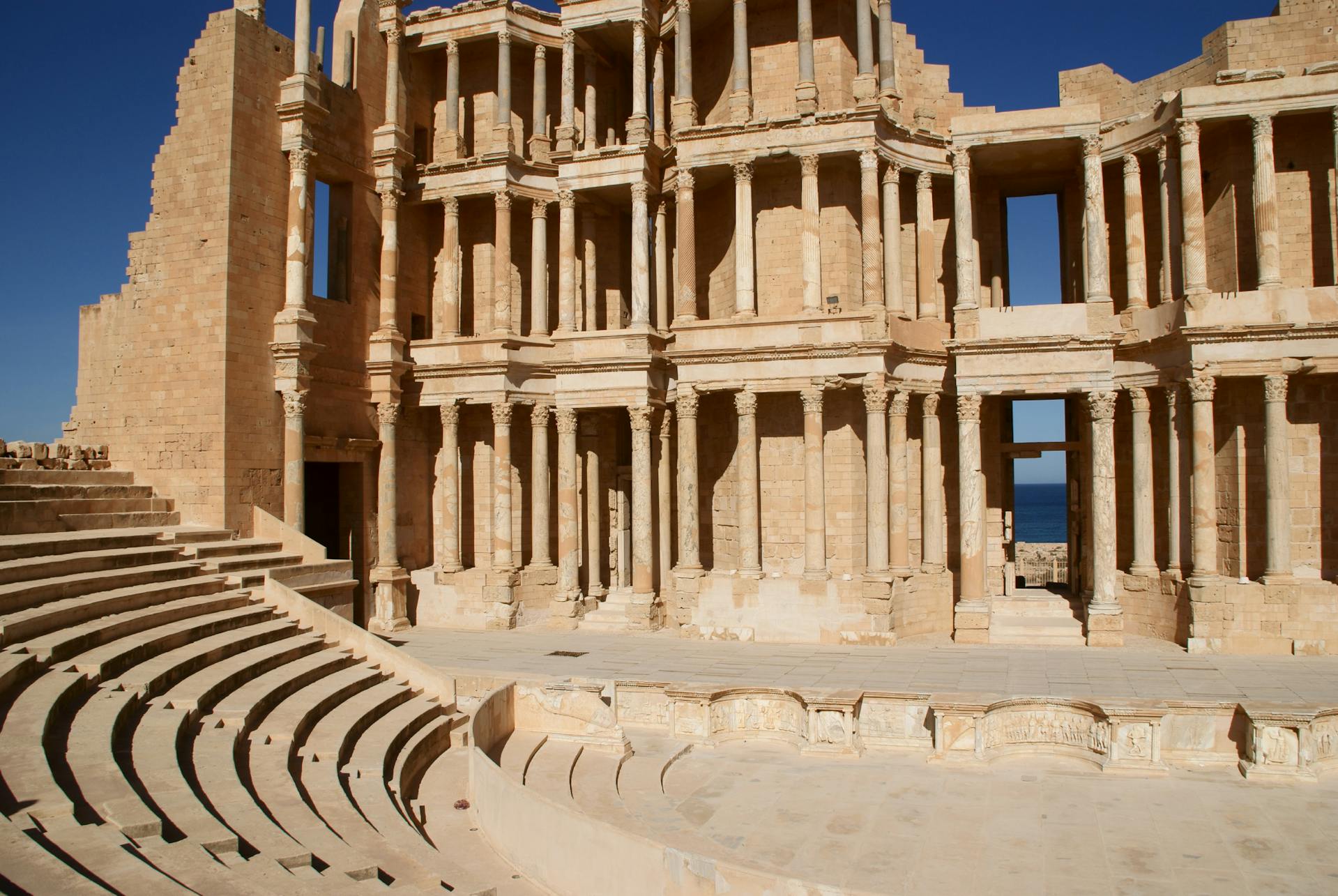
The stunning three-story stage wall of the theater, adorned with original marble columns and intricate reliefs, creates an unforgettable backdrop against the Mediterranean Sea. Walking among the ruins, visitors can also explore ancient temples dedicated to Isis and Serapis, as well as residential quarters and mosaics.
The city was badly damaged by earthquakes during the 4th century, particularly the quake of 365. It fell under the control of the Vandal kingdom in the 5th century, with large parts of the city being abandoned. It enjoyed a small revival under Byzantine rule, when multiple churches and a defensive wall (although only enclosing a small portion of the city) were erected. The town was the site of a bishopric.
Within a hundred years of the Muslim invasion of the Maghreb, trade had shifted to other ports and Sabratha dwindled to a village.
Sabratha remains a powerful testament to Roman urban design and coastal trade networks.
Geographical Context
Situated 70 km (43 mi) west of Tripoli, Sabratha is easily accessible via a 1-hour coastal drive.
Practical Information
When to Go:
- Best Months: March–May and October–November for cooler temperatures.
- Avoid July–August due to high coastal heat and humidity.
What to Bring:
- Comfortable shoes for walking on uneven stones.
- Sun protection: wide-brimmed hat, sunscreen, sunglasses.
- Lightweight backpack with water and snacks.
Accessibility:
- Theater seating and ruins involve steps and uneven terrain.
- Guided tours provide context and help navigate the site safely.
Nearby Pairings
- Tripoli: Base your visit here and combine with a city tour.
- Leptis Magna: Pair with another Roman site for a two-day historical itinerary.
Traveler Tip
Visit early in the morning to capture golden light on the theater’s marble columns and avoid crowds.
unforgettable unique experiences
Unique travel and tourism packages and itineraries to experience the historic locations of Libya.
Experienced and Professional Team
Professional travel consultants and local guides to maximize your travel to Libya.
Wide and Diverse Intineraries
Unique packages and itineraries from places with unique natural beauties to historical and cultural heritage.
Customized and Personalized Services
Work with our team and travel partners to create unique Personal and/or Business itineraries.